Last updated: September 15, 2026
ChatGPT has become one of the most widely used AI assistants for everyday work, learning, writing, research, and creative tasks. Developed by OpenAI, it can understand natural-language instructions and help with everything from answering questions to drafting content, analyzing files, generating images, and assisting with coding.
But is ChatGPT actually useful for everyday users, and who can benefit from it most?
In this review, we take a practical look at its main features, common use cases, strengths, and limitations.
What Is ChatGPT?
ChatGPT is a conversational AI assistant developed by OpenAI.
Instead of interacting with traditional menus or complicated software, you can simply describe what you need in natural language. ChatGPT can then generate a response based on your instructions and the context of the conversation.
It can be used for tasks such as writing, brainstorming, learning, translation, problem-solving, research, coding, and more.
One of its biggest advantages is its flexibility. The same tool can be useful to a student working through a difficult concept, a writer developing an article, or someone who simply wants help organizing their ideas.
Key Features
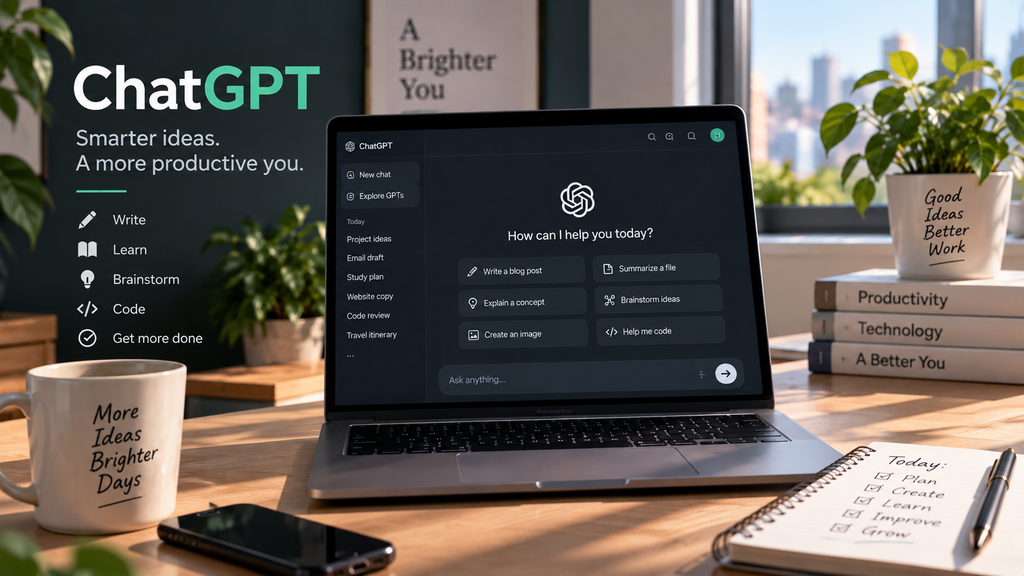
1. Writing and Editing
ChatGPT can help draft, rewrite, summarize, and improve text.
For example, you can use it to:
- Draft emails and articles
- Rewrite text in a different tone
- Summarize long documents
- Brainstorm content ideas
- Improve clarity and structure
This makes it particularly useful when you know what you want to say but need help expressing it.
2. Research and Learning
ChatGPT can explain complicated topics in simpler language and help users explore unfamiliar subjects.
Depending on the available tools and plan, ChatGPT can also search the web for recent information and perform deeper research across multiple sources.
It can also help break a difficult subject into smaller steps, making it useful for learning and self-study.
3. Coding Assistance
ChatGPT can assist with programming by explaining code, suggesting solutions, identifying potential problems, and helping users understand technical concepts.
It can be useful for both beginners learning programming and experienced developers who want another way to approach a problem.
However, generated code should still be reviewed and tested before being used in a real project.
4. Images and Files
ChatGPT can work with uploaded files and images, depending on the features available to your account.
Users can upload documents or images for analysis, ask questions about their contents, and use ChatGPT to extract or explain information. ChatGPT also supports image creation in supported experiences.
5. Voice and Other Tools
ChatGPT can also support voice conversations and other integrated tools, depending on the user’s plan and availability.
These additional capabilities make it more than a simple text chatbot and allow it to fit into a wider range of workflows.
What Can You Use ChatGPT For?
ChatGPT is especially useful for tasks where you need to generate, organize, explain, or transform information.
Some common examples include:
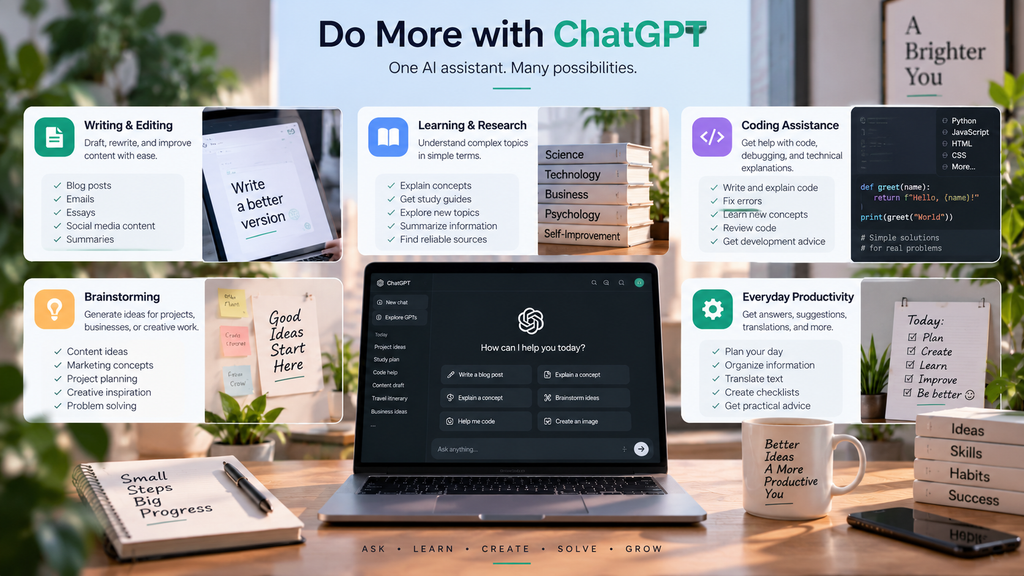
Writing & Editing
Draft articles, emails, descriptions, outlines, and other written content.
Learning & Research
Ask questions, simplify difficult concepts, and explore unfamiliar subjects.
Productivity
Create plans, organize ideas, summarize information, and break large tasks into smaller steps.
Coding
Understand programming concepts, review code, troubleshoot problems, and generate examples.
Brainstorming
Develop ideas for projects, content, presentations, business concepts, and creative work.
Everyday Questions
Get explanations, suggestions, translations, calculations, and help with many everyday tasks.
Pros and Cons
Pros
- Easy to use
- Supports many different types of tasks
- Useful for writing and brainstorming
- Can assist with coding and technical questions
- Supports multiple languages
- Can work with files and images
- Additional tools can expand its capabilities
Cons
- AI-generated answers can sometimes be inaccurate
- Some features have usage limits depending on the plan
- Certain advanced capabilities require a paid subscription
- Responses may occasionally be too general
- Important information should still be verified independently
ChatGPT Pricing
ChatGPT offers a free option as well as paid subscription plans. The exact features and usage limits depend on the plan and can change over time. OpenAI currently lists Free, Go, Plus, and Pro options, with additional Business and Enterprise offerings.
For example, ChatGPT Plus is currently listed at $20/month, while the availability and limits of individual features can change as OpenAI updates the service.
For the latest pricing and plan details, users should check OpenAI’s official ChatGPT pricing page before subscribing.
Who Is ChatGPT Best For?
ChatGPT is a good fit for people who regularly work with information or need help turning ideas into useful output.
It can be particularly useful for:
- Students and independent learners
- Writers and content creators
- Developers
- Researchers
- Professionals
- Small business owners
- People looking to automate repetitive tasks
It isn’t a replacement for human expertise, but it can be a useful assistant for speeding up many everyday tasks.
Final Verdict
ChatGPT is one of the most versatile general-purpose AI assistants available today.
Its biggest strength isn’t one specific feature. It’s the range of things it can help with. Writing, research, coding, learning, brainstorming, file analysis, and other tasks can all be handled through a relatively simple conversational interface.
That flexibility makes ChatGPT worth considering for anyone who wants an AI assistant for both work and everyday tasks.
Our verdict: A versatile AI assistant with a wide range of practical uses, especially for writing, research, learning, and productivity.